If you have experienced a water damage loss in your home, act fast because quick response is critical in limiting the damage. Call NOW! Get our 24/7 emergency response team headed in your direction. Our goal is to respond within 3 hours in order to reduce the absorption of the water into the building materials and reduce overall drying time.
Water Damage Restoration Experts in Central Oregon
Goal of Work
Our shared goal is to return your property to pre-loss condition as quickly as possible. Our first priority is your safety and peace of mind. Our cutting-edge methods and high tech equipment combined with highly experienced technicians allows Mountain Air Restoration to professionally restore your home in minimum time. Our team members are certified for Restorative Drying by the IICRC (Institute of Inspection, Cleaning and Restoration Certification) the industry standard of care for Water Restoration Technicians. We endeavor to help our client through this difficult circumstance with professionalism and understanding during the restoration process. Our dedication to your satisfaction is evident in our Motto “We’re not done until you’re satisfied!”
- Water Extraction
- Inspection
- Dehumidification
- Air Movers
- Monitoring
- Documentation
Certified Restoration Contractors
Inspections & Estimates
Prompt, Reliable Service
Workmanship Guarantee
Water Extraction
Our high powered water extraction equipment really sucks! (in a good way)
- Any standing water will be forcefully extracted using a portable water extractor and light wand attachment. This initial extraction of the affected area will contain further migration of water within the structure decreasing drying time mitigating further damage.
- Deep Extraction: a sealed or weighted tool will remove maximum amount of water from materials such as carpet and pad, this will save building materials, increase evaporation, and reduce drying time. (This saves you and your insurance co. money!)
- Water removal by extraction is 12 times more efficient than evaporation alone.
Inspection
- During the initial inspection, we determine the extent of water damage which allows us to formulate and implement an effective restorative drying plan.
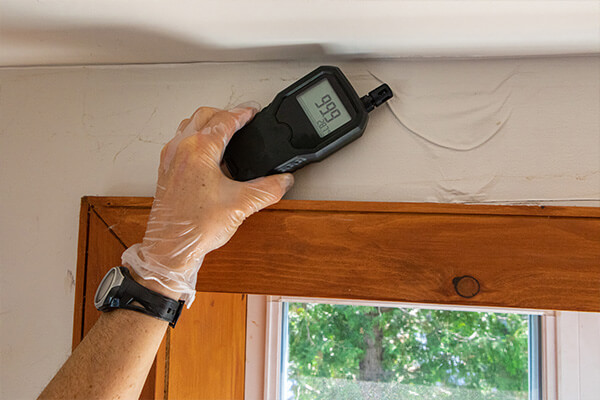
- Moisture meters allow us to map the extent of water migration, and determine degree of saturation of affected materials.
- Initial temperature, relative humidity, and specific humidity readings are taken to be used for comparison during the drying process.
- Ongoing inspections will be conducted throughout the drying process to assess changes in the drying environment.
Dehumidification
This is how we take water vapor out of the air. Our standard is to get the relative humidity below 60% quickly to prevent secondary damage to your home.
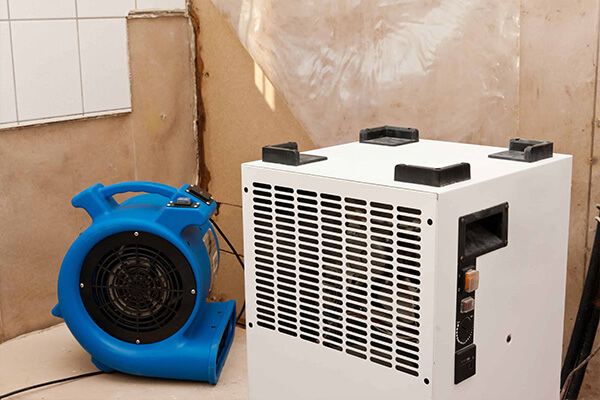
- We use cutting edge low grain refrigerant industrial dehumidifiers that are engineered for the demands of water damage restoration.
- These high tech units operate extremely efficiently removing up to 130 pints of water per day while conserving electricity use at the job site. They also allow us to remotely monitor the drying progress.
Air Movers
- We employ DRI-EAZ Jet CXV axial air movers. An extremely efficient and powerful unit that pushes air at 3200 CFM (cubic feet per minute) while drawing only 3 amps of electricity. (Comparable units commonly used by competitors push only 2250 CFM while drawing up to 7.2 amps!)
- Also in our air moving arsenal are DRI-EAZ Sahara HD Turbo Dryers. These units are specifically designed to dry carpets and walls. It has the ability to push air around corners creating a continuous flow of air throughout the structure.
- We can use these air movers with interair drying attachments that allow us to effectively dry inside wall spaces, behind cabinets, under hardwood floors, and in other structural areas, saving time and reconstruction costs.
- Additional assets in the air moving arena are the high powered Vortex Axial Fans. These help create negative pressure in water damaged areas that will prevent cross-contamination to other parts of the structure. These fans can also be utilized in an open drying system to introduce warm dry air from outside when weather conditions permit, further expediting the restoration process.
Water Damage FAQ
As soon as possible. Mold can begin growing on wet building materials, carpet, and furniture within 24 to 48 hours, and clean water can become contaminated the longer it sits. The IICRC S500 water damage standard calls for a prompt response, and the sooner professional drying starts, the more of your home can usually be saved instead of torn out. Mountain Air Restoration provides 24/7 emergency water damage response across Central Oregon.
If it is safe to do so:
- Stop the water source. Shut off the main water valve or the valve at the fixture.
- Turn off power to wet areas at the breaker. Never stand in water to reach an electrical panel.
- Stay out of rooms with sagging ceilings, and don't use ceiling fans or lights in wet ceilings.
- Move valuables, electronics, papers, and area rugs to a dry place. Put foil or plastic under furniture legs.
- Blot up excess clean water with towels. Don't use a household vacuum on water.
- Photograph the damage for your insurance company.
- If the water is sewage or outside flood water, stay out of the area, keep children and pets away, and don't run fans, because they can spread contamination.
The IICRC S500 standard groups water by how contaminated it is, and the category determines what can be saved:
- Category 1 (clean water): broken supply lines, sink overflows, rain coming straight in. Many materials can be dried in place.
- Category 2 (gray water): dishwasher or washing machine discharge, or a toilet overflow with urine only. It has significant contamination.
- Category 3 (black water): sewage, outside flood water, or water that has sat long enough to grow bacteria. Porous materials it touched, such as carpet, pad, and drywall, are generally removed and thrown away.
Water can get worse over time. A clean-water leak left for several days can become Category 2 or 3.
Most structural drying takes 3 to 5 days. Hardwood floors, plaster, concrete, cabinets, and water that has reached wall cavities or crawlspaces can take longer. Our technicians take moisture readings at every visit and record them in a drying log. Equipment is removed only when materials reach their drying goal, which is the normal moisture level of matching unaffected materials in your home.
Drying only works when it runs continuously. Turning equipment off lets moisture move back into materials, makes drying take longer, and raises the risk of mold. If noise or a tripped breaker becomes a problem, call us, and we'll adjust the setup. Expect a modest increase in your electric bill. Some insurance policies reimburse it.
We save materials whenever industry standards allow. Materials are removed when water is trapped behind them and can't be dried in place, when they've been touched by Category 3 water, or when they're swollen, delaminated, or already growing mold. Carpet pad is almost always replaced because it holds water like a sponge. A "flood cut," where drywall is removed 2 to 4 feet up from the floor, lets air reach the wall cavity so the structure dries faster.
In older homes, Oregon requires an asbestos survey before materials are disturbed in homes built before 2004, and lead-safe work practices apply in homes built before 1978. We handle both as part of the job.
Often yes, if it's clean water and it's caught quickly. The carpet can usually be dried and re-laid, though the pad is normally replaced. With sewage or flood water (Category 3), industry standards call for the carpet and pad to be removed and thrown away.
With clean-water losses, most families stay home while the drying equipment runs. We recommend staying out of the affected area and possibly relocating when there is sewage or floodwater, mold, or demolition dust, or when someone in the home is very young, elderly, pregnant, immunocompromised, or has respiratory problems.
It depends on your policy, and only your insurance company can confirm coverage. Sudden and accidental losses, like a burst pipe or appliance failure, are commonly covered. Long-term leaks, maintenance issues, and groundwater are commonly excluded, and outside flooding usually requires a separate flood policy. Mold coverage is often limited.
We document everything insurers expect, including photos, moisture readings, drying logs, and itemized estimates, and we work directly with your adjuster. You have the right to choose your own restoration contractor.
When appropriate, yes, especially with contaminated water. We use EPA-registered products according to their labels. Antimicrobials support the restoration process but are never a substitute for removing contamination, cleaning, and drying. Let us know about any chemical sensitivities.
We're Here to Help
Call Us Now
Need Some Help?
Our 24/7 emergency dispatch crew will be on our way as soon as we receive your call.
Give Us a CallWanna Talk to Us?
Send Us A Message
Not an emergency, but you'd like to schedule a property evaluation? Fill out our Contact Form today.
Contact UsProudly Serving Central Oregon with Top-Rated Restoration & Repair Services
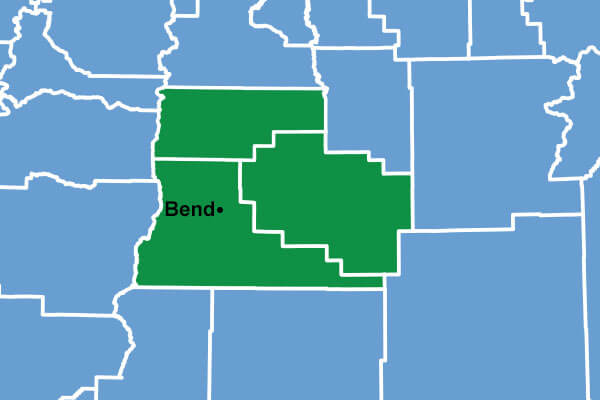
Proudly providing damage restoration, and repair services to Deschutes County, OR | Crook County, OR | Jefferson County, OR.
- Bend
- Redmond
- Sisters
- Prineville
- La Pine
- Sunriver
- Tumalo
- Madras