Bend, Oregon—Units 1–4 + Crawlspace + Interior Unit 3
Project Overview
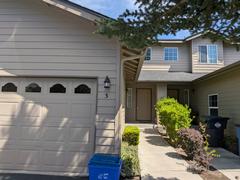
Deschutes Property Management contacted Mountain Air Restoration after discovering elevated moisture, visible mold growth, and compromised air quality across multiple units of a four-plex on NE Savannah Drive. The issue extended from the attics to the crawlspace and into the interior of Unit 3, requiring a coordinated, multi-phase remediation and structural drying project.
Our team performed full evaluations, air testing, attic drying, crawlspace remediation, interior cleaning, and post-remediation verification to restore the building to a safe, healthy condition.
Before
What We Found
Across the property, several serious issues were identified:
Attics (Units 1–4)
-
Elevated moisture content requiring structural drying
-
Need for containment at attic hatches
-
Four identical attic setups required
-
5-day drying cycle per attic
-
Equipment needed: negative air machines, dehumidifiers, air movers (Estimate reference: “Due to the documented elevated moisture content, structural drying services are required…”)
Crawlspace
-
Mold growth on soil, joists, subfloor, and perimeter walls
-
Detached and damaged dryer ducting
-
Missing or compromised vapor barrier
-
Heavy organic growth beneath Unit 4
-
Insulation saturated or contaminated and requiring removal. Estimate reference: “Treat all mold-affected soil… Beneath Unit 4 only (heavily affected, notable organic growth).”
Interior – Unit 3
-
Elevated airborne mold burden
-
Visible mold on salvageable materials
-
Need for full environmental cleaning, HEPA vacuuming, scrubbing, fogging, and sealing (Estimate reference: “Home is negatively affected by mold growth and excessive airborne mold spores…”)
Air Quality Testing—Before & After Remediation
Independent Laboratory Analysis (Eurofins Built Environment Testing)
Before Remediation—February 20, 2026
Pre-remediation air samples showed clear indicators of active indoor mold growth, especially in the upstairs unit.
Key Findings (Pre? Remediation Report)
-
Upstairs MoldSCORE™: 282 (HIGH) “The MoldSCORE™ was in the HIGH range…indicates a high likelihood of mold growth in the area tested.”
-
Downstairs MoldSCORE™: 199 (MODERATE) “A moderate MoldSCORE™ means the results are inconclusive… suggests that a more detailed inspection… may make sense.”
-
Chaetomium detected indoors: Upstairs: 13 raw count / 170 spores/m³ Downstairs: 5 raw count / 67 spores/m³ “Chaetomium… presence indoors… is often an indication that these molds are originating from growth indoors.”
-
Outdoor baseline extremely low (<13 spores/m³). This made indoor elevations even more significant.
Interpretation
The upstairs unit showed active mold growth, and the downstairs unit showed moderate likelihood of indoor mold sources. Combined with moisture findings in attics and crawlspaces, remediation was clearly required.
After Remediation—May 14–19, 2026
Post-remediation air samples demonstrated a successful return to normal indoor air conditions.
Key Findings (Post-Remediation Report)
-
Downstairs MoldSCORE™: 121 (LOW)
-
Upstairs MoldSCORE™: 129 (LOW) “A low MoldSCORE™ indicates the air sample did not detect… the presence of indoor mold growth in this room at the time of sampling.”
-
Chaetomium: Not detected indoors Downstairs: 1 raw count / 13 spores/m³ Upstairs: 0 detected
-
Penicillium/Aspergillus: Not detected indoors
-
Indoor spore counts significantly below outdoor baseline: Outdoor: 1,900 spores/m³, Downstairs: 280 spores/m³, Upstairs: 160 spores/m³. “Location spores/m³: 280… Outside spores/m³: 1,900.”
Interpretation
All units tested showed no indicators of active indoor mold growth, and airborne mold levels were well within normal ranges. This confirms that the attic drying, crawlspace remediation, and interior cleaning were effective.
After
What Mountain Air Restoration Did
Our team executed a full-scale, multi-zone remediation plan:
Attic Drying—Units 1–4
-
Installed containment at each attic hatch
-
Set up negative air machines, dehumidifiers, and air movers
-
Completed 5-day drying cycles
-
Performed monitoring visits and final takedown
-
Ensured all four attics reached safe moisture levels
Crawlspace Remediation
-
Installed containment and negative air
-
Remediated mold-affected soil using natural boron treatment
-
Scrubbed joists, subfloor, and foundation walls
-
Removed contaminated insulation
-
Repaired and replaced rigid metal dryer ducting
-
Installed 2,390 sq. ft. of new 6-mil vapor barrier
-
Reinsulated the crawlspace with R-30 batt insulation
Interior Remediation – Unit 3
-
Full HEPA vacuuming of floors, walls, ceilings, and soft goods
-
Enzyme-based scrubbing of all affected surfaces
-
Whole-home wipe-down with natural antimicrobial products
-
Fog treatment and 48-hour seal
-
Application of antimicrobial primer/sealer
-
Replacement of HVAC return filter with MERV?13
-
Post-remediation air sampling
Post? Remediation Testing
Final air samples confirmed:
-
Indoor airborne mold levels returned to normal
-
No indicators of active indoor mold growth (Lab reference: “A low MoldSCORE™ indicates the air sample did not detect… indoor mold growth.”)
Results
Moisture was eliminated from all attic spaces. Crawlspace fully remediated, sealed, and insulated. The interior of Unit 3 restored to a healthy, safe condition. Air quality verified through third-party laboratory testing. And the property was stabilized and protected against future mold growth
This project demonstrates Mountain Air Restoration’s ability to handle complex, multi-unit moisture and mold challenges with precision, transparency, and care.